
Merch and Eyes
Intelimerch is using smart merch to turn fan love into money


Hi there,
Welcome to the 55th edition of Next Capital, where we help you find Africa’s most promising startups, before they get big.
In our last edition, we wrote about the startup using a runner’s game to redesign Nigeria’s “lesson teacher” practice. If you missed it, you could catch up here 👇🏾


Next Capital is launching a podcast, and we need your brain for it.
We want you to send us your ideas.
The thing you’ve been sitting on. The gap you spotted in a market. The problem you’ve experienced one too many times and thought, “Why hasn’t anyone built this yet?”
Send it in, and we might review it on the pod.
And here’s a little secret: we’re creating something that’s going to let you build your ideas in real life.
Drop your idea here → Next Ideas Pod!
P.S. - Know someone who always has startup ideas? Forward this email to them!
Startup: Intelimerch
Location: Nigeria
There’s little Aisha wouldn’t do to get her hands on BTS merch. And there are millions of Aishas globally.
The entertainment industry has always understood something most other industries don’t: fans aren’t just consumers. A consumer buys what they need, but a fan buys proof of devotion. That distinction is worth billions.
Taylor Swift sold an estimated $440 million worth of merch on the Eras Tour, excluding concert tickets. Beyoncé’s Renaissance Tour sold $171 million in merchandise. Harry Styles grossed $23 million in merch on his Love on Tour run. BTS recently reunited on stage after all seven members completed their military service. Two months into the reunion tour, they’ve already pulled in over $76 million from their first eight shows.
These aren’t side numbers, but a category of revenue entirely outside streaming loyalties, performance fees, and brand deals. For the biggest artists in the world, merch is serious business.
Now, meet Afrobeats.
In 2024, Nigerian artists pulled in over ₦58 billion in Spotify royalties alone and a big slice came from listeners outside Nigeria. African music exports have also grown 49% since 2023. Afrobeats is a global product now, but the money is constrained.
Streaming is a landlord’s game, and the platforms are the ones collecting rent. So, African artists keep hunting for ways to own the fan relationship directly. Merch, a $16 billion business, is the obvious lever. But done the western way, it’s bound to fail in Africa, thanks to counterfeiters.
Picture this. Davido drops a t-shirt. He prints “OBO” on it, prices it at ₦50,000, and you, a card-carrying fan, buy it, no questions asked. Then the counterfeiter shows up. He prints the same logo on a near-identical shirt and sells it for ₦15,000. Now you feel robbed, because from two feet away, nobody knows if you have the original or a knockoff.
So next time, you probably act like the rest of the herd: buy the fake. Multiply that across a fanbase, and the artist whose name is on the shirt makes the least money from it. Last week, we spoke to Dolapo Akanji, who thinks he has a solution to this problem.
Intelimerch: smart merch that connects fans to creators
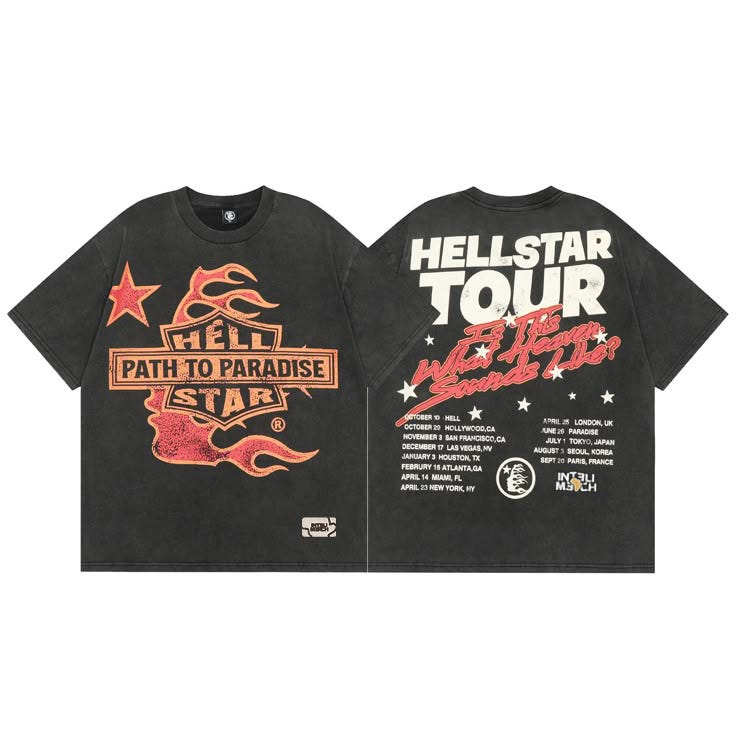
Intelimerch embeds NFC chips into merch — t-shirts, hoodies, face caps, tote bags — so a fan can tap it with their phone and unlock something a counterfeit can never give them: a perk straight from the artist.
At face value, it looks like they’re simply selling authenticity, but you’d be wrong. Basic NFC tags can be copied by anyone with a blank tag and ten minutes. (Encrypted chips like the NXP 424 DNA are effectively unclonable, but that’s a pricier path.)
The real sell is incentive-flipping. Tap a genuine shirt, and you might get access to a single two hours early, an invite to a listening party, or 10% off the next concert. Those perks live on Intelimerch’s software, Merch OS.
A counterfeiter can clone the shirt, even clone the tag, and still hit a dead end, because they can’t serve up the artist’s actual experiences. The fake becomes just… a shirt. You’re not fighting counterfeiting head-on (a war nobody wins); you’re making the original worth more, so fans choose to pay up.
The second layer is data. Roughly 80% of merch sells at live shows, but when cash changes hands, no data gets captured. A chip that requires activation (name, email, city) hands the artist a list of their highest-intent fans. And those fans are gold: the probability of selling to an existing customer sits around 60–70%, versus 5–20% for a stranger. Tour planning, drops, retargeting, all of it gets sharper.
Get in front of 11,000 investors, founders, execs, and tech enthusiasts in Africa.
Money talk
On traction, Intelimerch is early. Dolapo has built a working prototype of about 14 units across t-shirts, face caps, and tote bags with chips fully embedded. The hardware works, and the software is in active build.
The model is B2B, and reasonably sensible. Intelimerch coordinates production: an artist’s team fronts the manufacturing cost against a minimum order of around 50 pieces, then Intelimerch makes money three ways. One, a one-time setup fee per drop for using Merch OS. Two, a markup on each unit sold. Three, analytics; dashboards showing artists which cities their fans cluster in, sold as a planning tool.
It’s a clean structure that earns on both the physical sale and the software. The open question is volume: this is a high-margin, low-frequency business leaning on a handful of drops from a handful of artists. The unit economics work; but the number of units is what to watch. And that leads us to…
The Big Picture
Here’s the first thing to know: the merch market is real money, but it’s not a rocket ship.
The global merchandise business, shirts, hats, vinyl, the lot, is on track to hit $16 billion by 2030. MIDiA Research, who produced the number, projects annual growth slowing to about 1.6% as the market matures. So Intelimerch isn’t necessarily surfing a wave, but creating a new market instead. Here’s why we think so.
First, the part of the music business that is growing fast is “expanded rights”, which is the labels’ cut of merch, live, and branding. It grew 21.5% in 2025 as streaming flattened. So, artists are actively hunting for income that isn’t a Spotify royalty. That’s exactly the door Intelimerch is knocking on.
Second, MIDiA reckons roughly 25% of merch already leaks to counterfeit or second-hand vendors globally, not just in Nigeria. So the problem Intelimerch is trying to solve has global potential too. But there are already a few players on the global stage. MMERCH is a nearly identical startup that serves the US market, and Qliktag sells merch with unclonable NFC chips already. They even did a real-world pilot in 2024 with Chris Lake, a US artist, logging 2,100 taps on merch sold at an event.
The upside is that while the category exists globally, it’s still pretty small. Intelimerch is positioned to solve that problem for the market with the highest pain point for it, with a model that’s exportable to the rest of the world.
What do you think - can Intelimerch become the tool that helps creators connect their fans?
Want to be featured in Next Capital? Drop us a line.
Until next week! 🫡
We’re always coordinating participation across active opportunities within the Next Capital pipeline, particularly for investors who can back startups.
If you’d like to be considered for current or upcoming opportunities, let us know, and we’ll follow up where there’s alignment.
Enjoyed reading this? Forward it to someone you think would enjoy it as well.